It is rare to encounter someone with the job title of “puppeteer” on their resume. Unless, of course, your weekends are spent in children’s theaters or in front of a television tuned to a big yellow bird. If not, then meeting one in the wild is enough to make you pause, and then wonder:
What does the job actually entail?
Why choose puppetry?
And perhaps, most pressing—How do you survive as one?
These are fair questions. After all, there are many ways a person can choose to spend their life. The choice of puppetry is decidedly unique, which warrants a certain level of curiosity and qualifies it as something worth writing about.
So, in the likely event that you are not in close proximity to a puppeteer, this article will explore what it means to be a professional puppeteer through the lens of what may be the best place in the United States to do so: Minneapolis, Minnesota.
Known for its music, theater, and deeply rooted arts culture, Minneapolis is also home to a thriving puppetry community—a network of artists, makers, performers, and educators moving between more than a dozen companies and collaborative projects across the Twin Cities.
At the center of that ecosystem is In the Heart of the Beast Puppet and Mask Theatre (HOBT), the subject of this article. To better understand the art form, the people who practice it, and the systems that allow them to continue, I spoke with three puppeteers whose experiences intersect with HOBT in different ways.
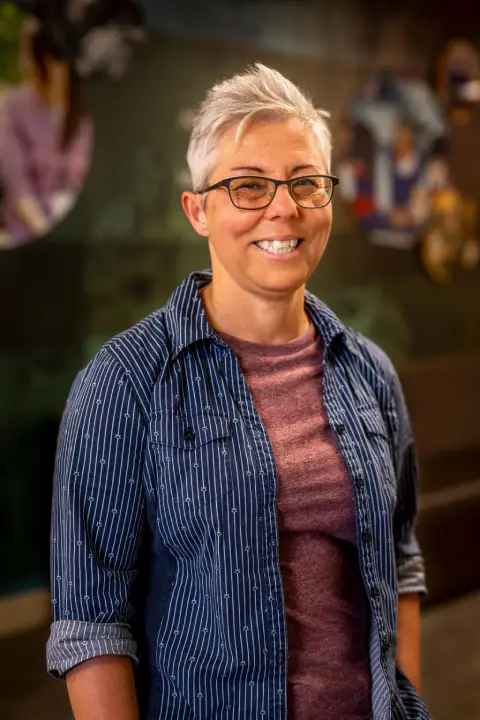
Elina Kotlyar, HOBT’s Executive Director.
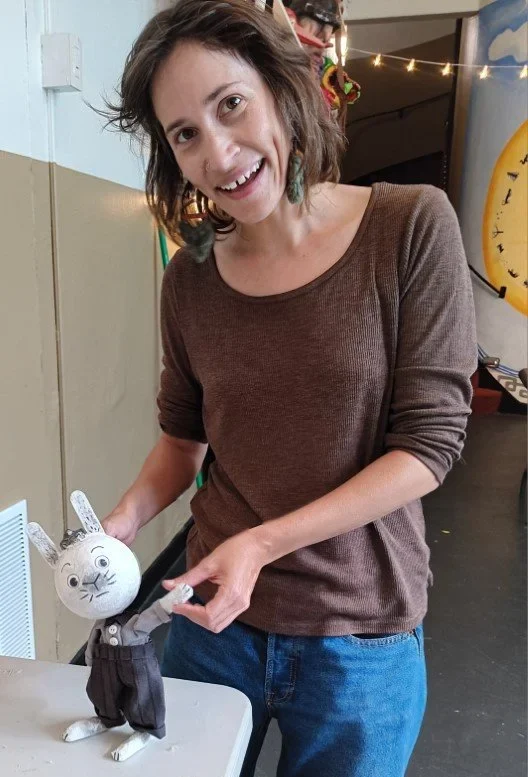
Chelly Beaver, one of six full-time puppeteers at HOBT.
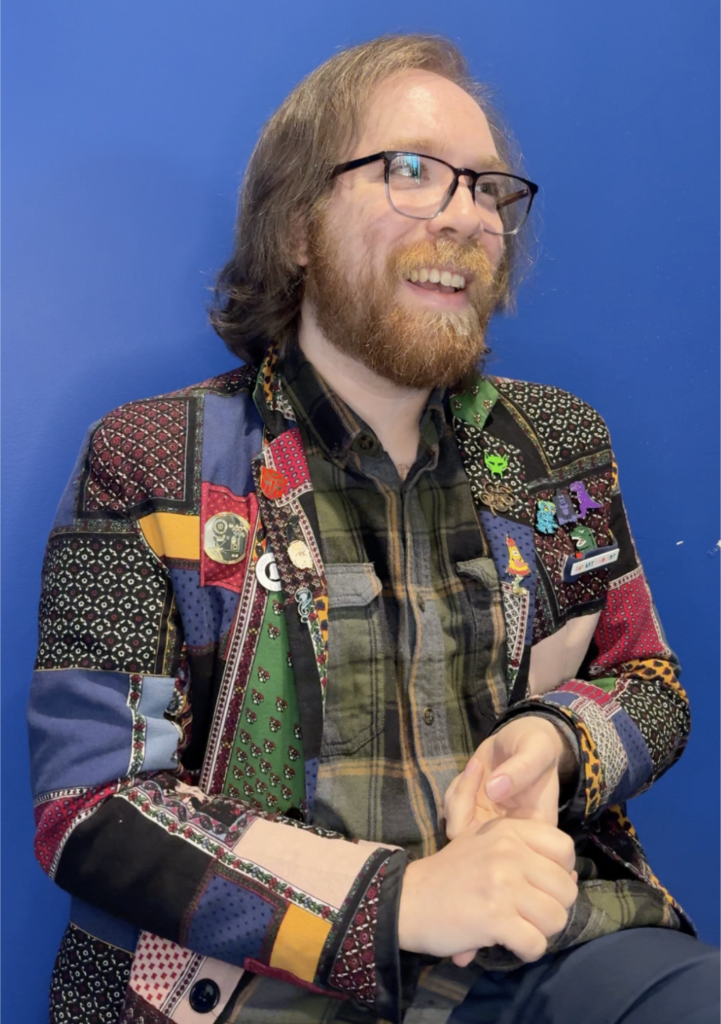
And Thomas Boguszewski, a contracted “gig” artist working across the Twin Cities arts scene.
This is not a comprehensive study of puppetry. To attempt would require a far broader survey; to succeed would require becoming a puppeteer myself. Instead, this is an attempt to follow curiosity to its natural conclusion, through one theatre and the people who sustain it.
What does being a “puppeteer” actually entail?
The easiest way to understand what HoBT puppeteers do is to look at what the theater does. So, I followed what occupied their time and how the space is used.
The answer, again and again, was the theatre’s programming, three of which are examined below.
At HOBT, a small team of full-time artists, led by Executive Director Elina Kotlyar, handles the theatre’s day-to-day operations. That work spans programming, building materials, managing schedules, and, just as often, sweeping floors, washing windows, and locking doors at the end of the night.
From the outside, you can’t miss the theatre.
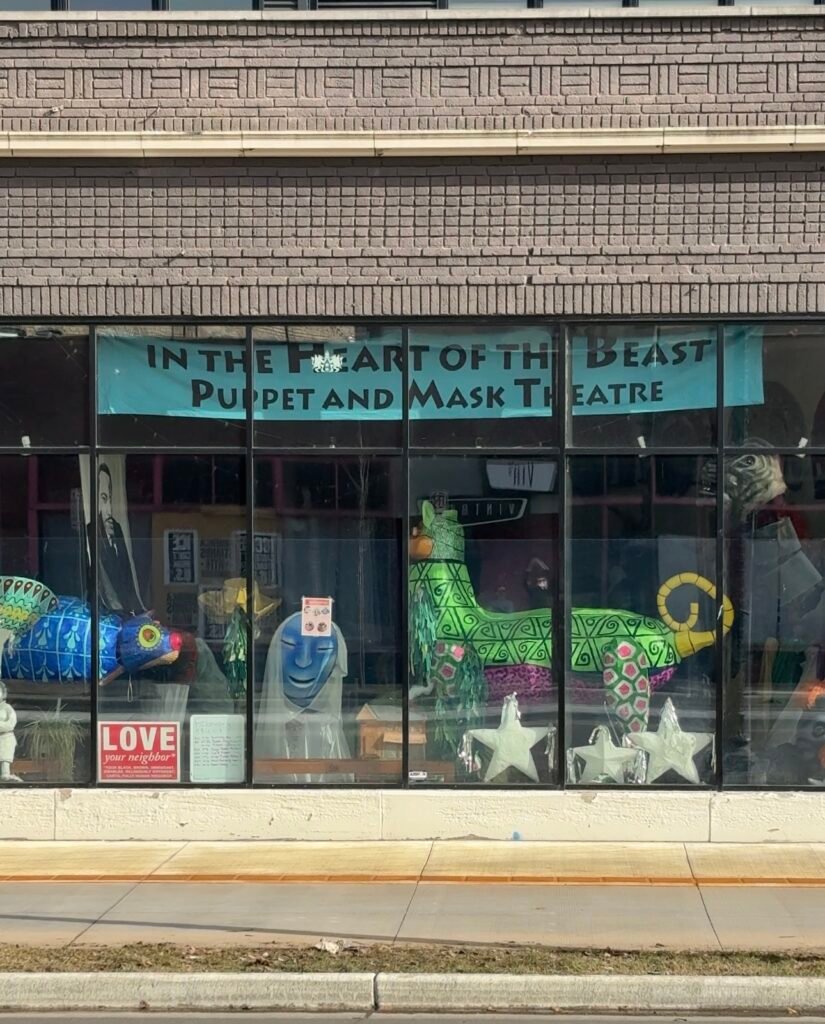
Image says enough.
And when you enter, your eyes will widen. Puppets. Hundreds of puppets.
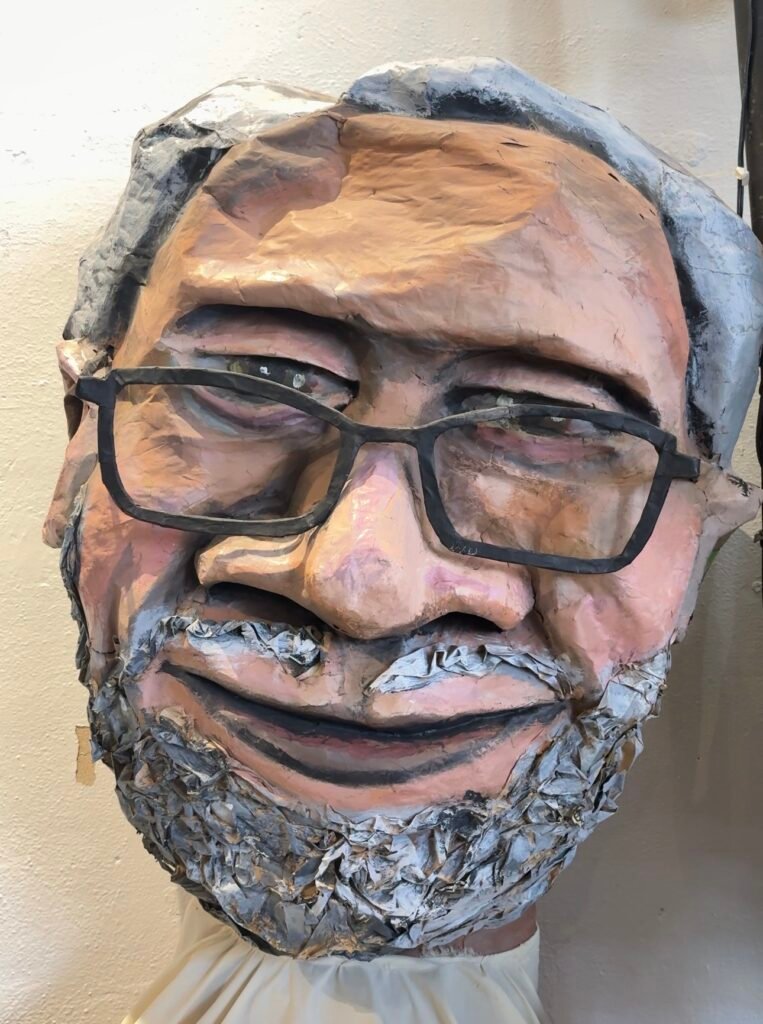
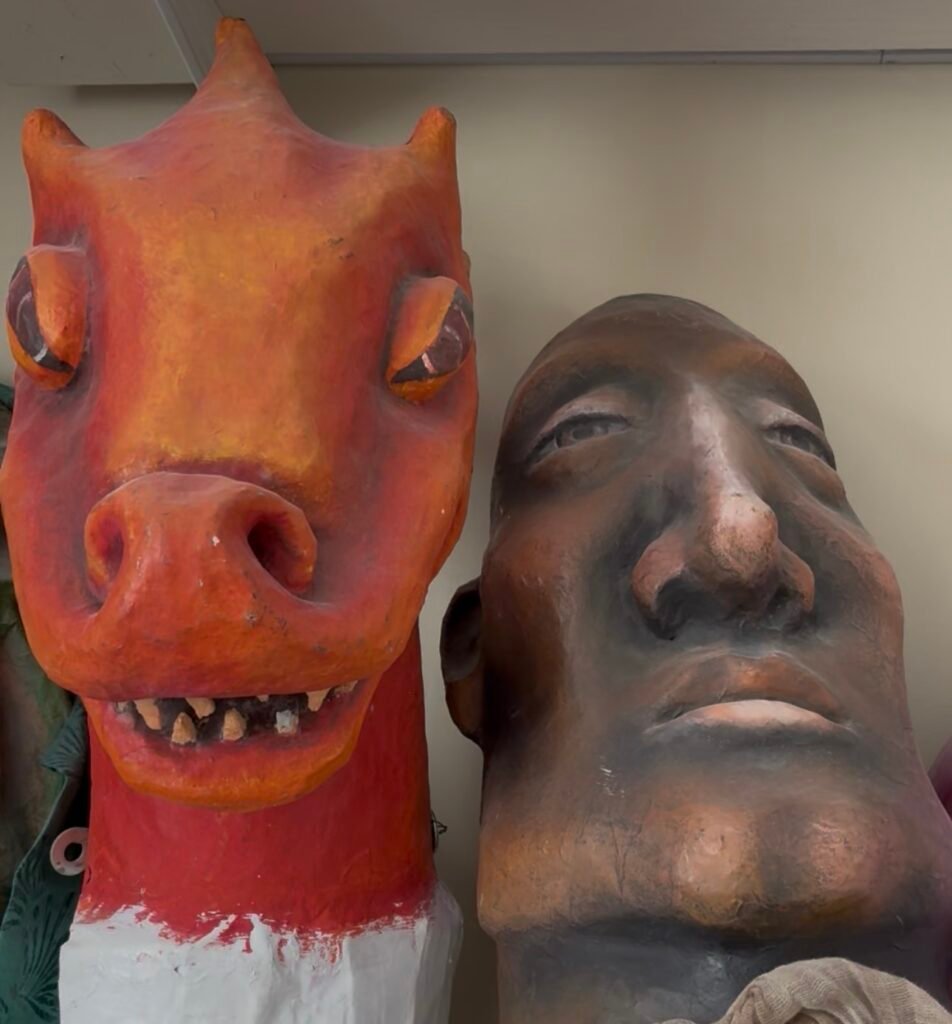
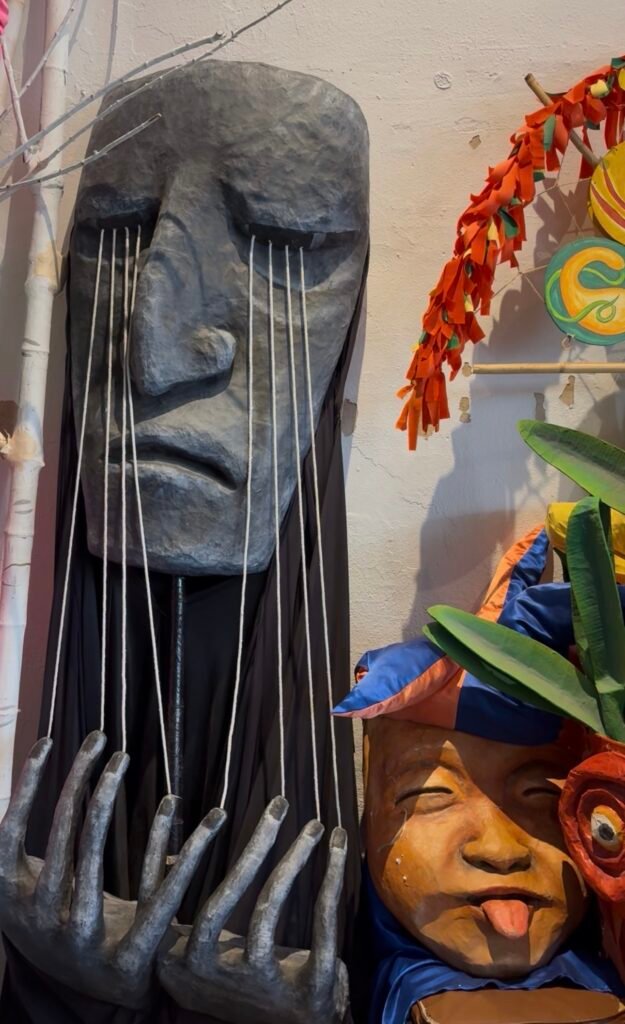

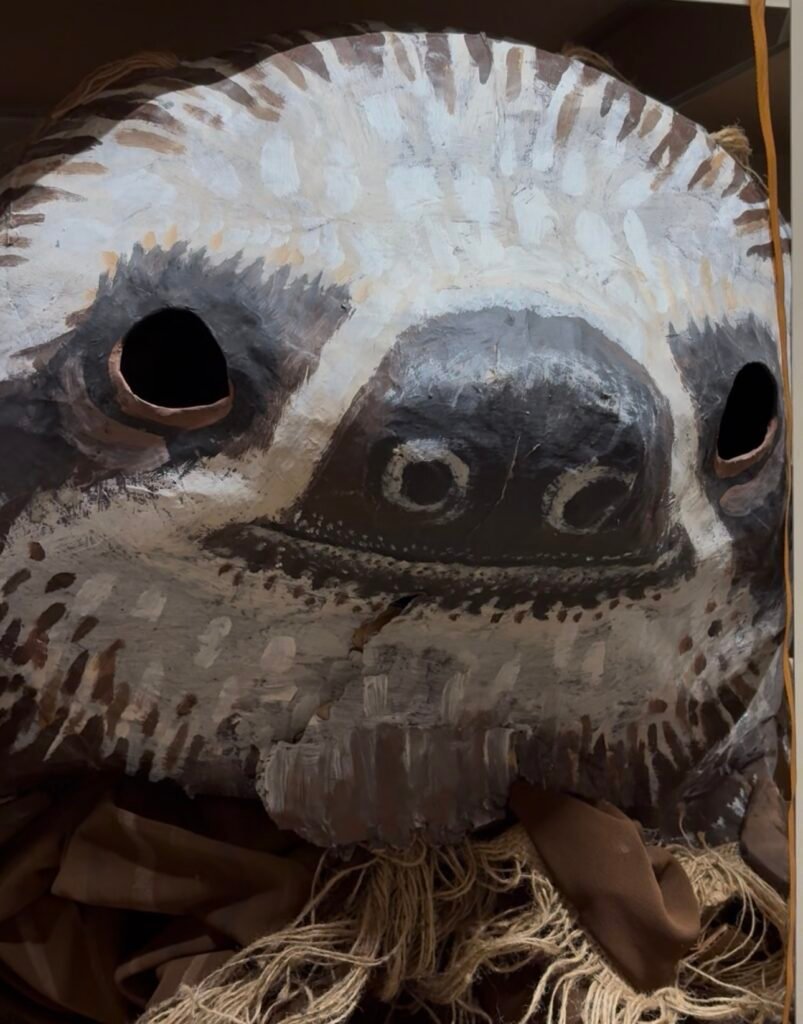
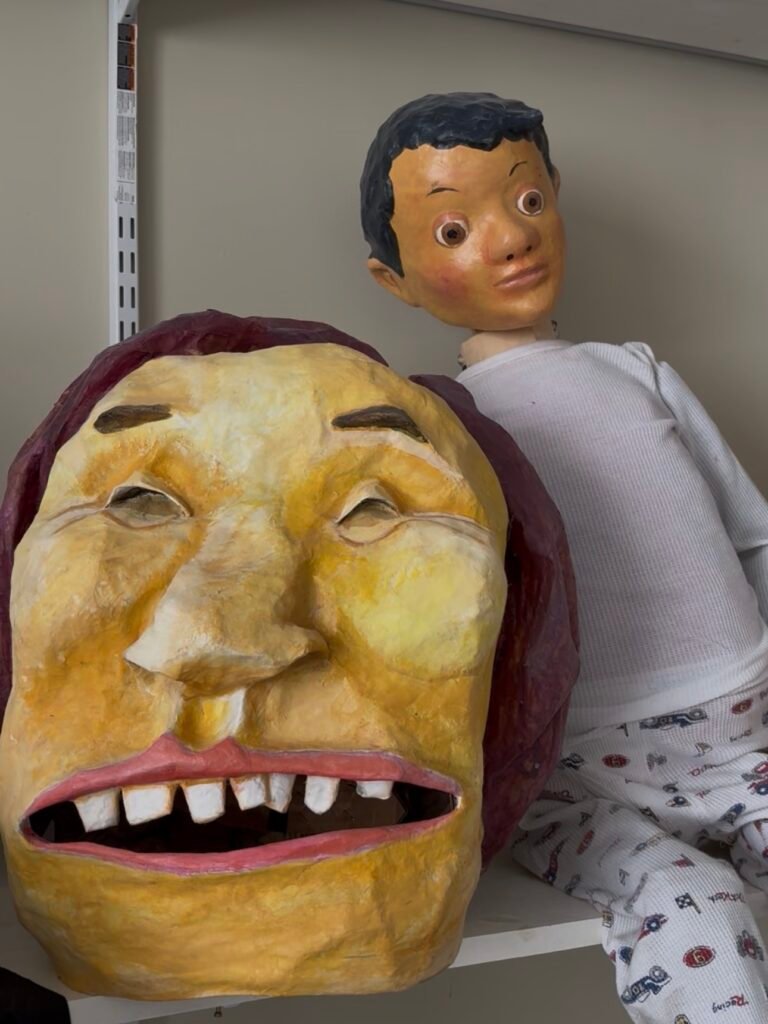
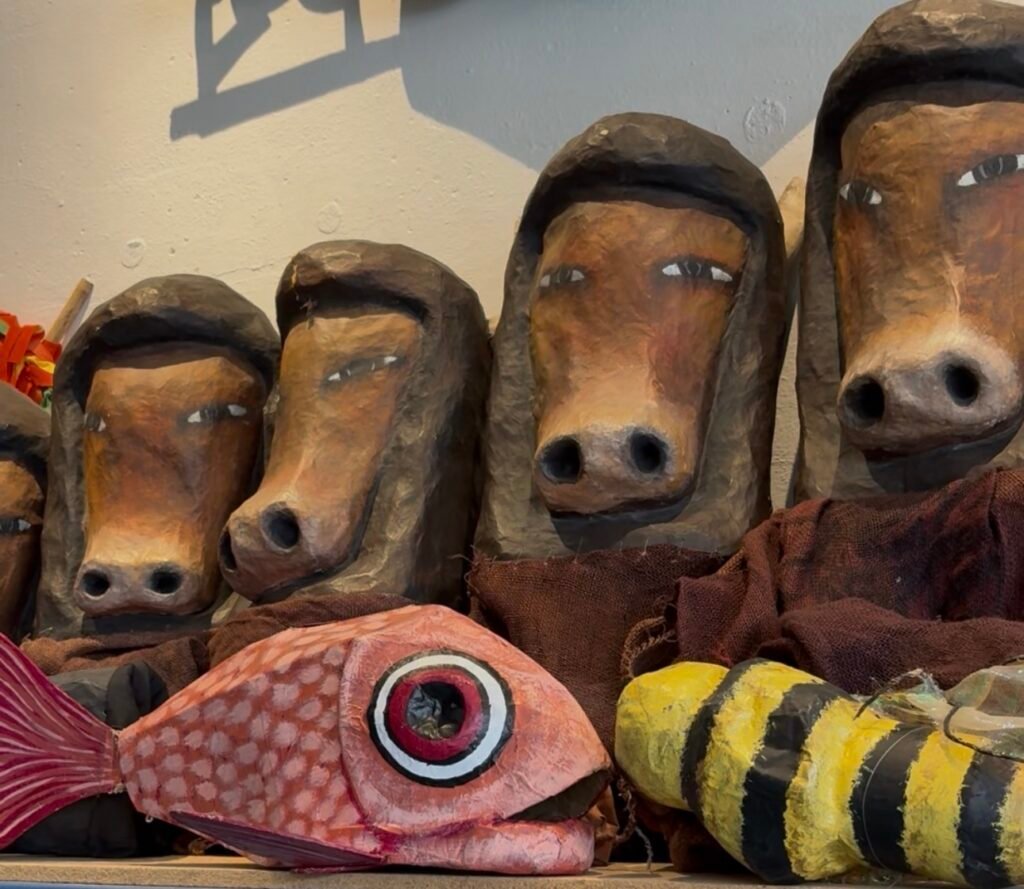
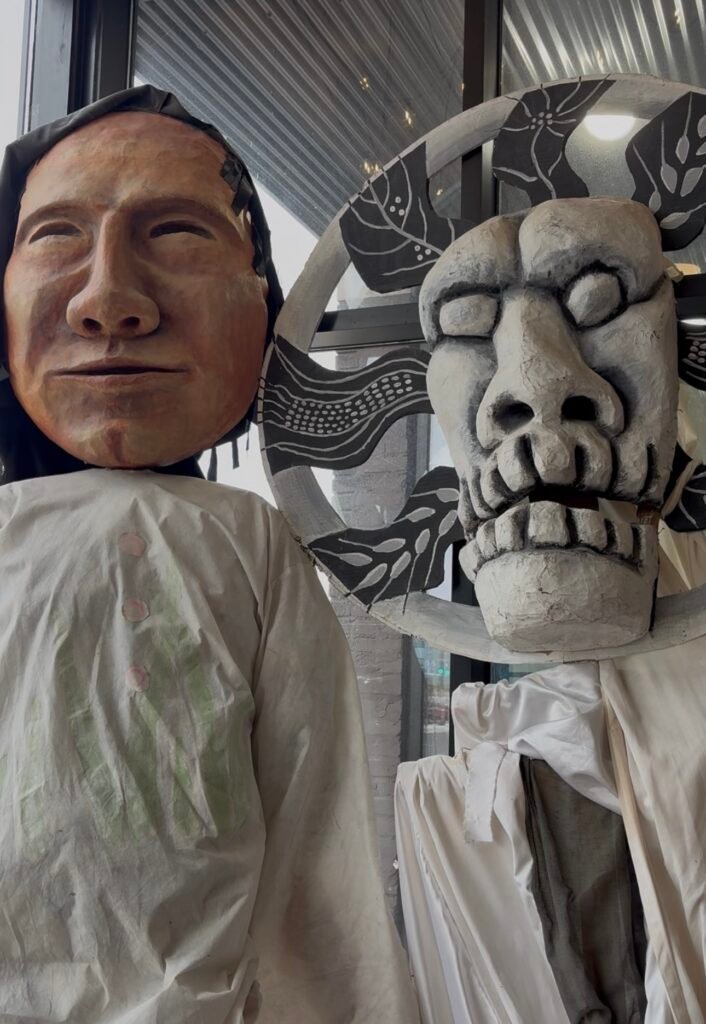
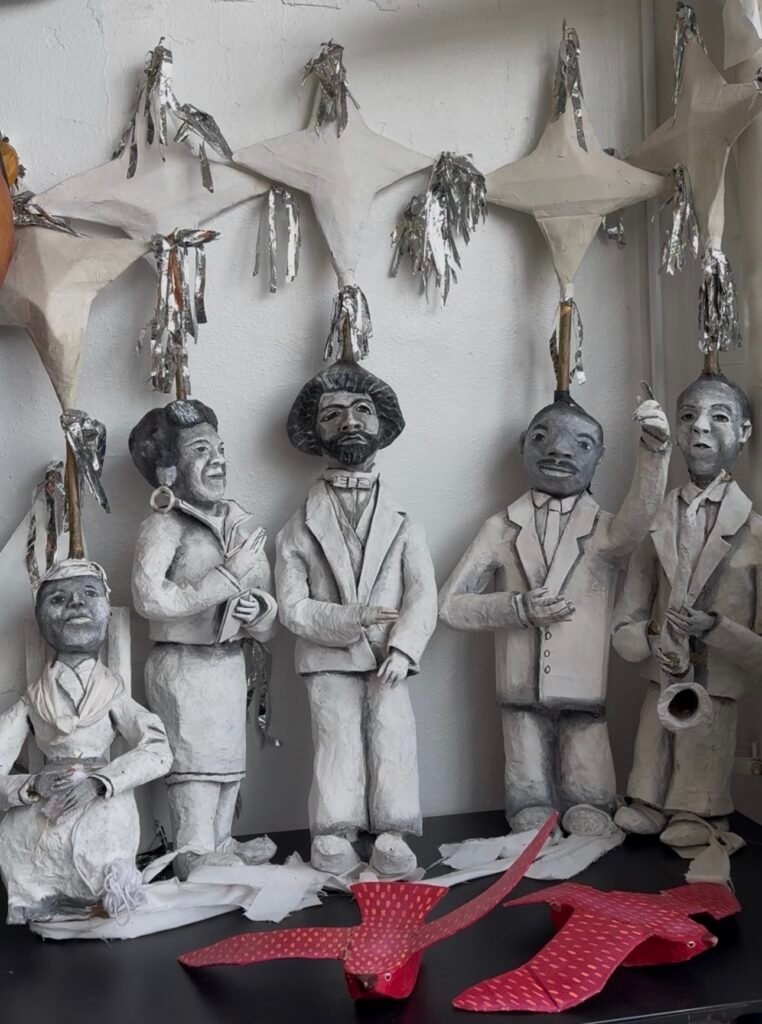
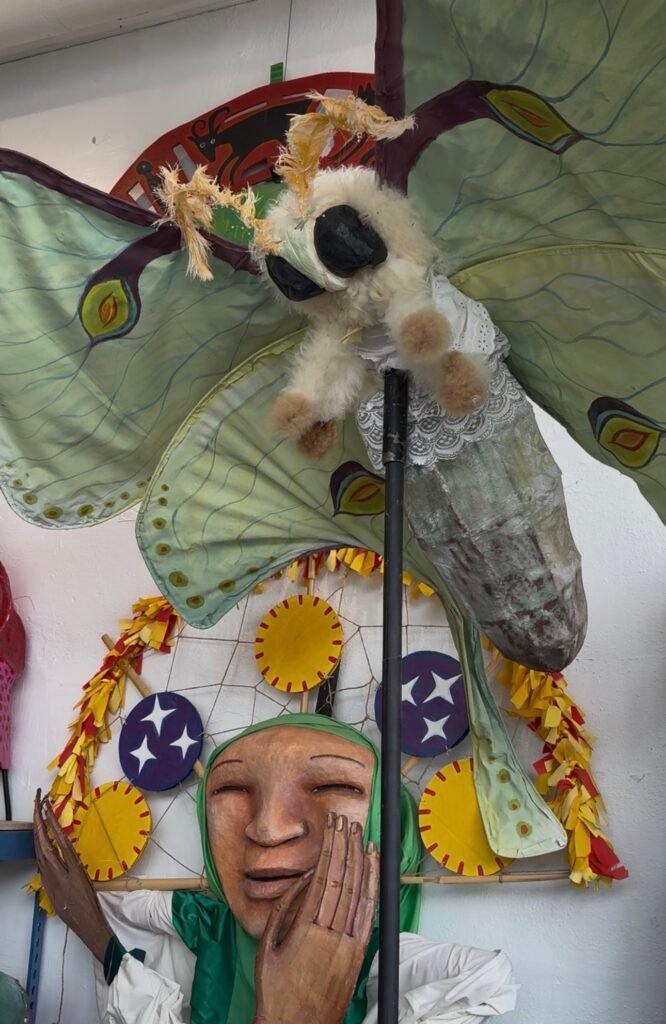
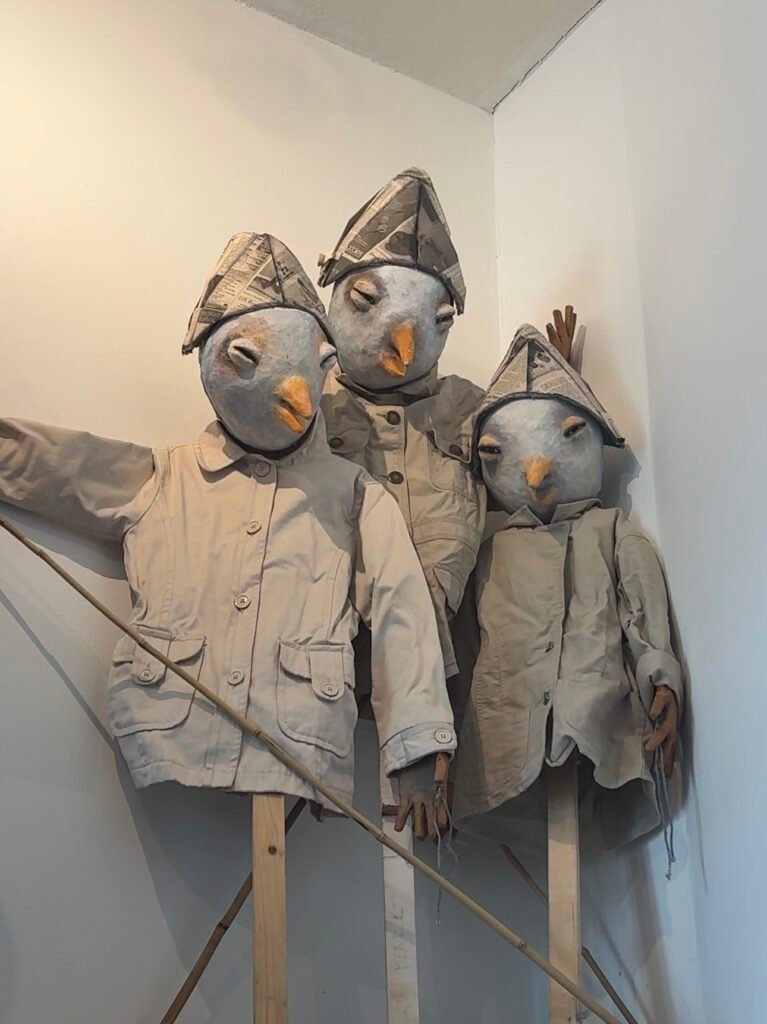
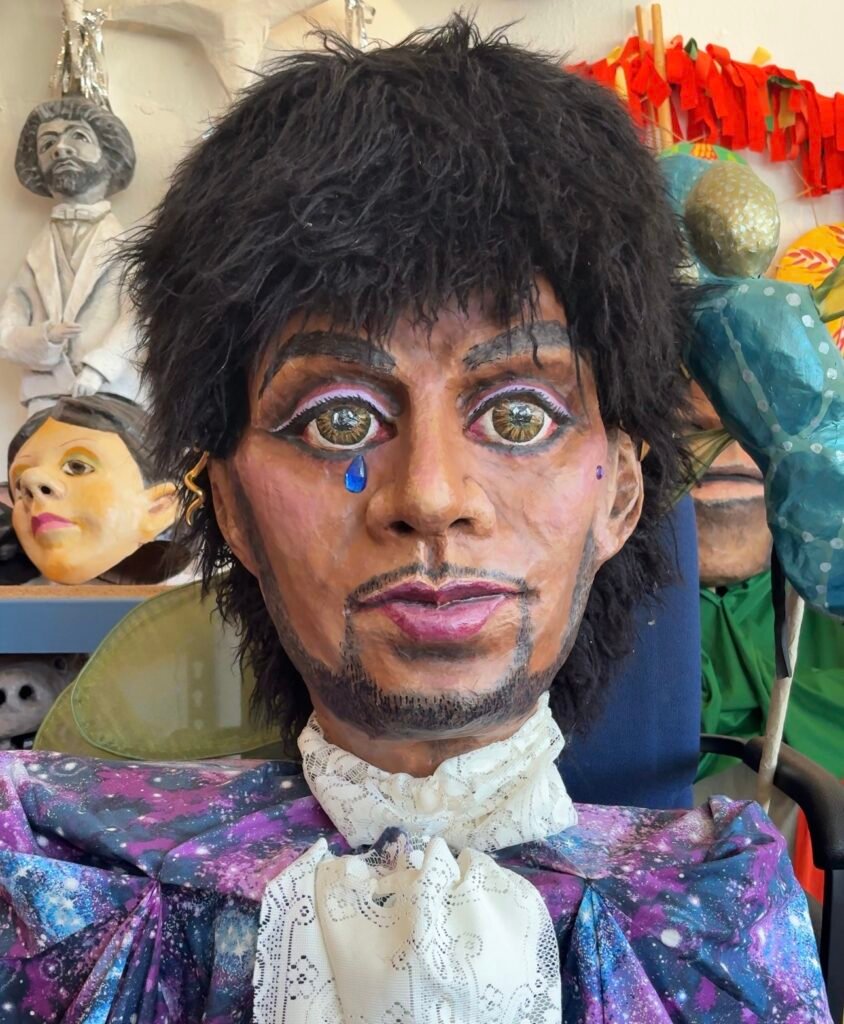
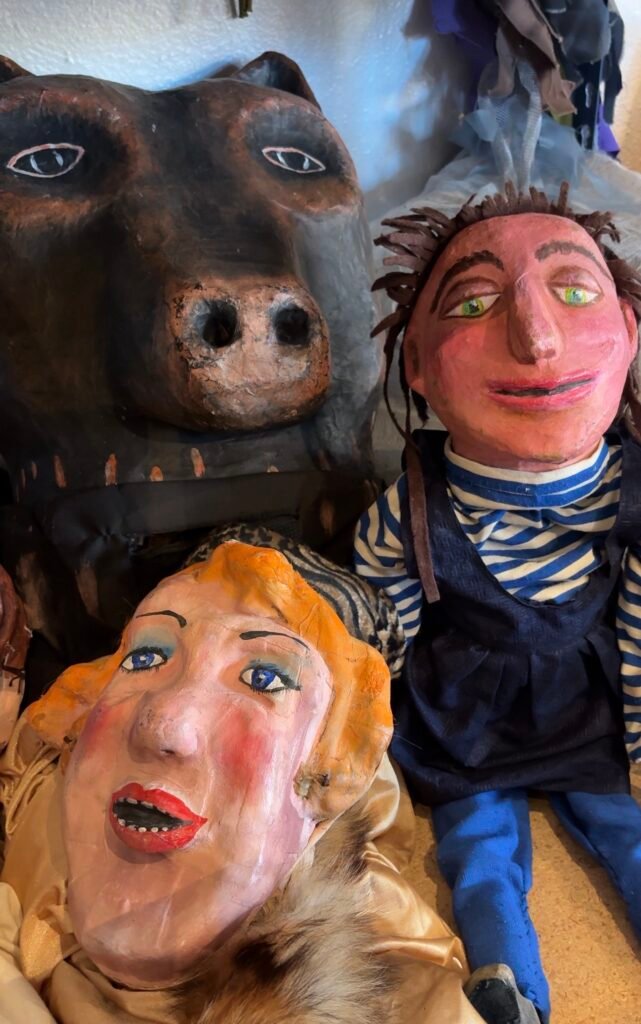
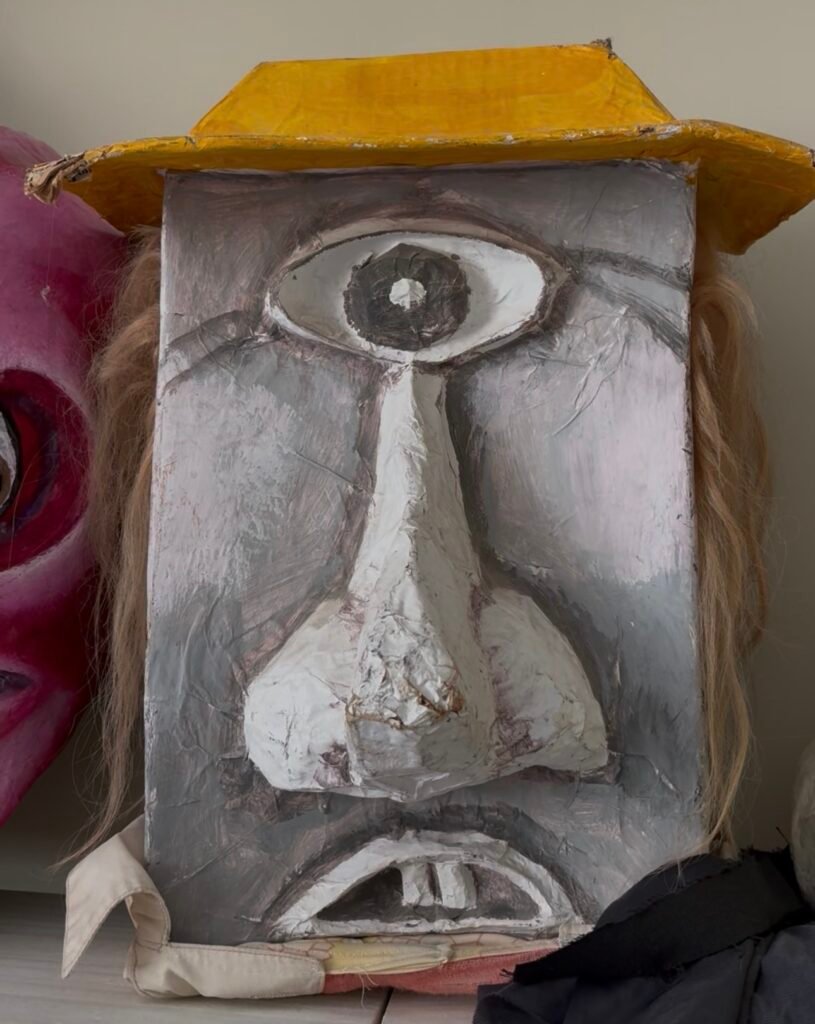
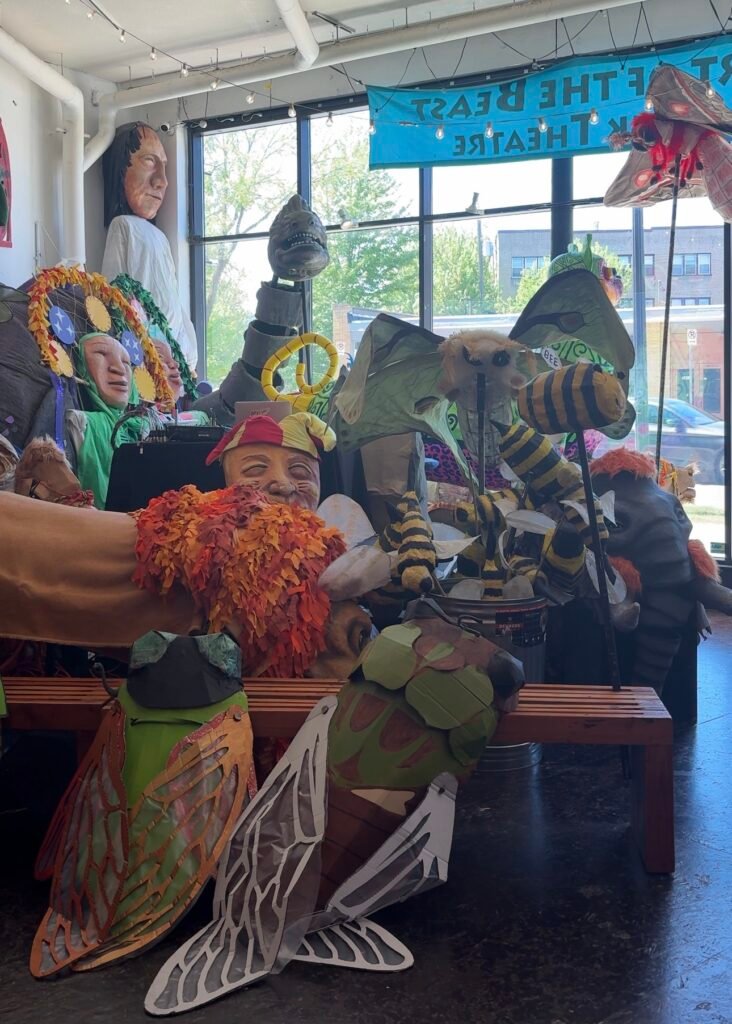
And that’s not even counting the basement.
Over its 53 years in operation, the theatre has amassed quite the collection of puppets, almost all of which were created using the staple method: recycled goods, papier-mache, and imagination.
So, who maintains these puppets? Who inventories them? Who ensures that none of them are possessed by the ghosts of puppeteers past?
That would be Chelly, HOBT’s resident “Puppet Librarian.”
“I came to the theatre after finding the job posting of ‘Puppet Librarian’ online. I’ve never read a more perfect job description.”
She is the puppet wrangler.
But what happens to the puppets when there is not a performance? Well, those at HOBT had this same question just a few years ago.
“Most of our puppets were in storage for years and years before we asked, ‘Why? Why not put them out for the public to enjoy?’ That’s the idea around the Puppet Library hours”, says Elina Kotlyar.
Just like a traditional library, visitors can attend the open hours recreationally, with the option of checking out the puppets for two-week periods. Those who choose to rent do so for many reasons: performances, protests, music videos, birthday parties, decorations, but in any case, the puppets are checked out to play.
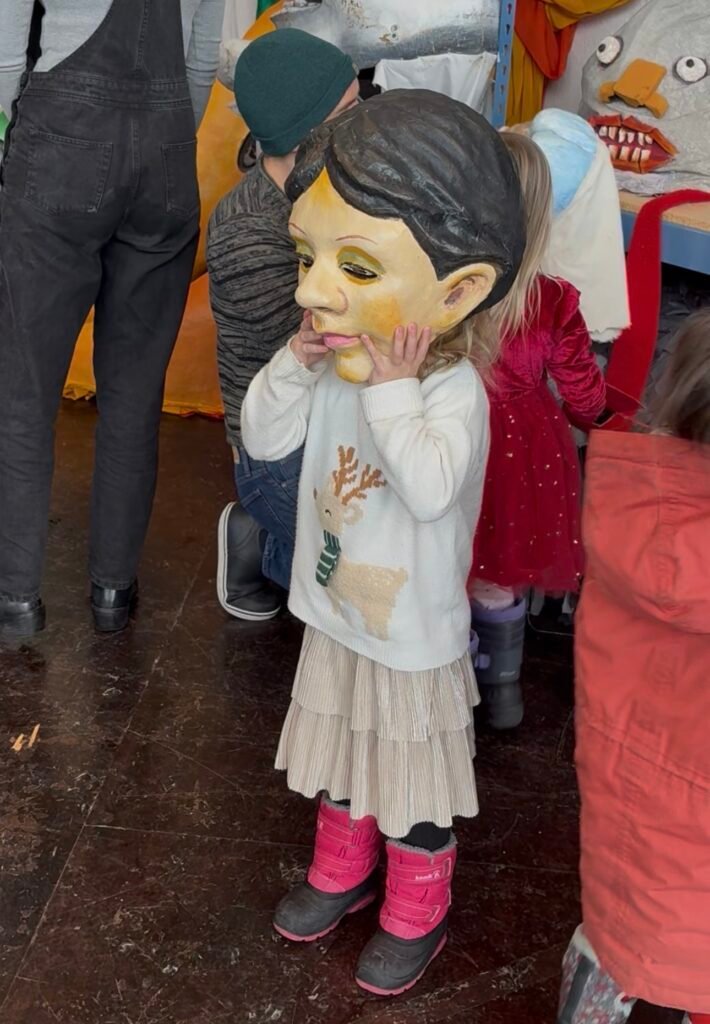
“Play” was a particularly emphasized topic among the puppeteers.
“I think it’s important to play,” Kotlyar said. “Children need to play, but everyone needs to play because our mental health requires it. You can have the best job in the world and still need a form of play outside of it. I think that’s why people read and why people write. It allows them to step outside their daily life for a moment. Puppetry does the same thing. You can come here and be something different.”
This touches on an integral part of being a puppeteer: creating the conditions for expression, vulnerability, and play. To be a puppeteer is to get the audience to play with you, and HOBT has done just that with their puppet library. They have transformed a space into a moment of self-discovery, for children and adults alike; a place to find confidence behind a mask, experiment with voice and character, and to rediscover the permission to play.
And to answer the more obvious question of, ’What if they come back damaged?,’ Elina replied,
“Everything is repairable. Nothing is so precious that it cannot be shared.”
The theatre retains this particular sentiment towards their puppets. Everything should be touched, played with, and experienced.
But be warned: if you do check out a puppet and fail to return it within the 2 week window, Chelly Beaver will be the one to track you down!
The theatre’s Saturday Storytimes have turned the traditional children’s book circle into interactive puppet shows. Familiar titles have become tactile experiences: A Very Hungry Caterpillar is physically fed until it’s full; an old lady swallows one thing too many, and children are invited to take part in the story telling rather than sit still and listen.
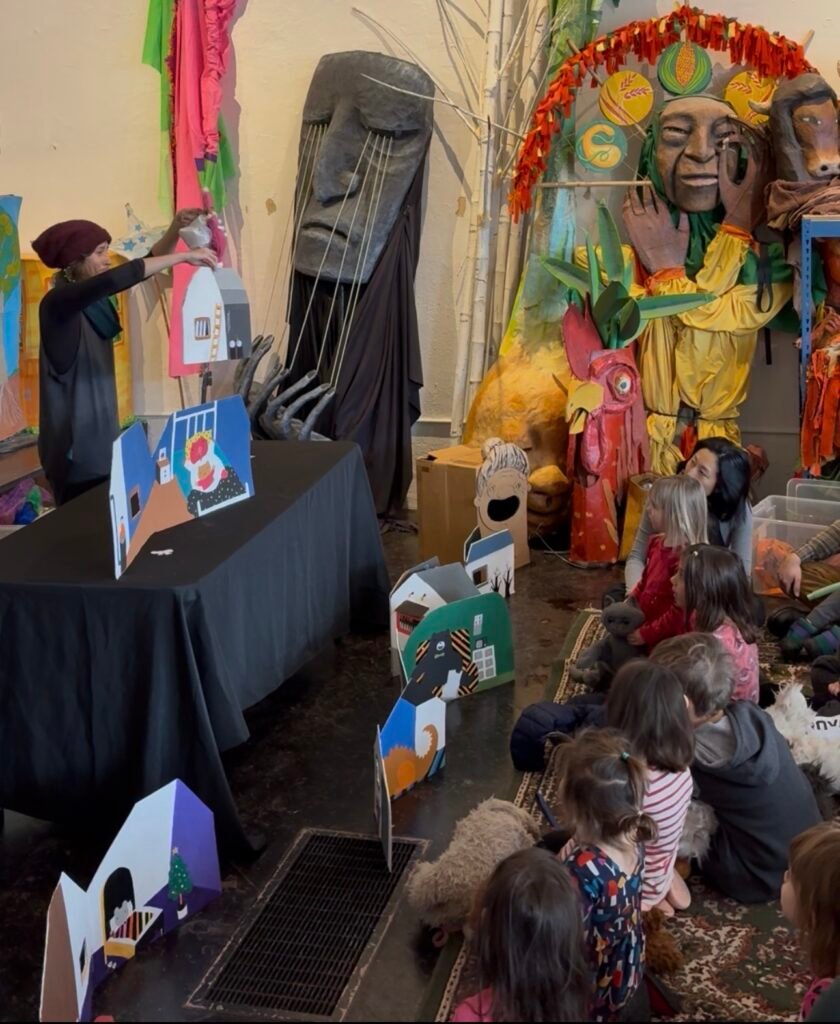
This interactivity is intentional. Life-long children’s book lover, Chelly Beaver, learned firsthand that children cannot just be read to, “I worked at a bookstore for 18 years, and every bookstore has one person who is obsessed with children’s books. That was me. I was that person.”
She continued, “When I did story times with the kids, I learned very quickly that you can’t just read books to kids. That’s boring. So, I started working with puppets.”
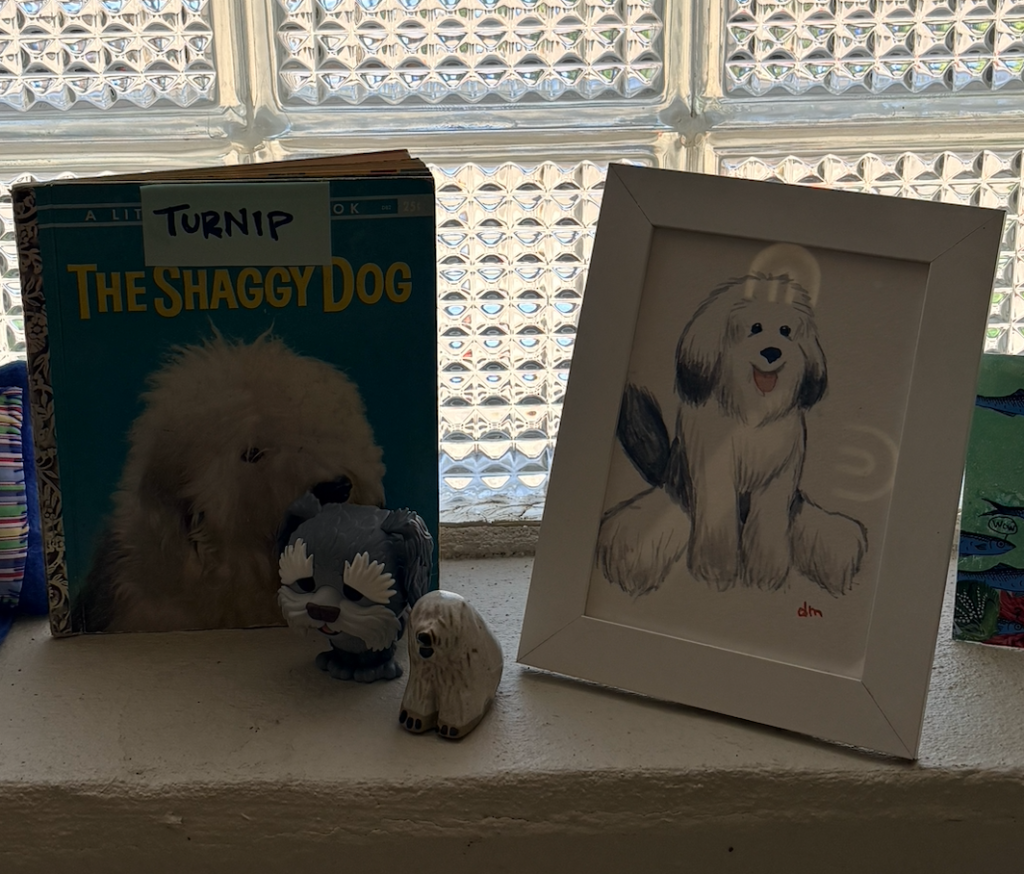
Chelly’s first puppet was a Folkmanis sheep dog, whom she lovingly named Turnip the Dog.
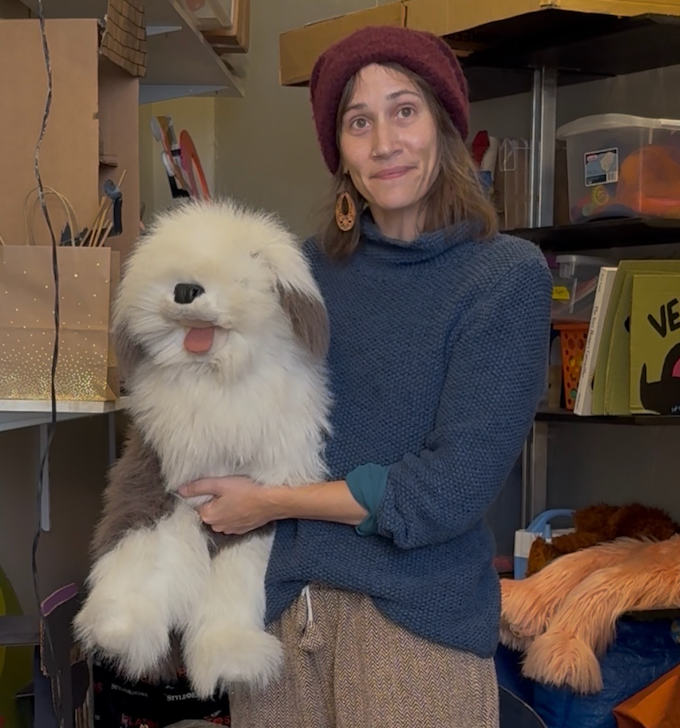
“There are things in life that you just know, in your bones, that you can do. That’s how I felt about puppetry. I knew that I could do it without ever having picked up a puppet before.”
Soon after adopting Turnip, she realized that puppetry—being a puppeteer, whatever that looked like—was her dream job. And, as you already known, she joined the theatre as the puppet librarian. Now you see how it was even more perfect for her.
“I started as the puppet librarian right after covid. The world was isolated at that time, and it was like the theatre was asleep. So, I thought, ‘I have a specific set of skills—story telling—how can I flex these skills to bring people back in?’”
Thus, the Saturday Storytimes were born.
Three years later, Beaver has created over 30 performances based on popular kids’ books.
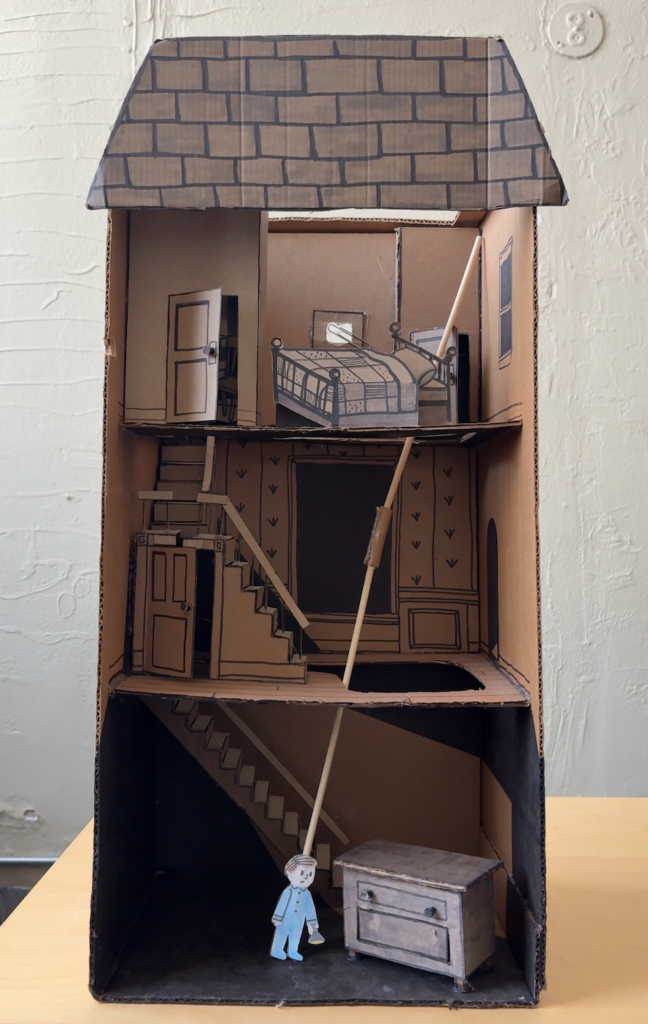
The Dark
Book by Lemony Snicket, Illustrated by John Klassen
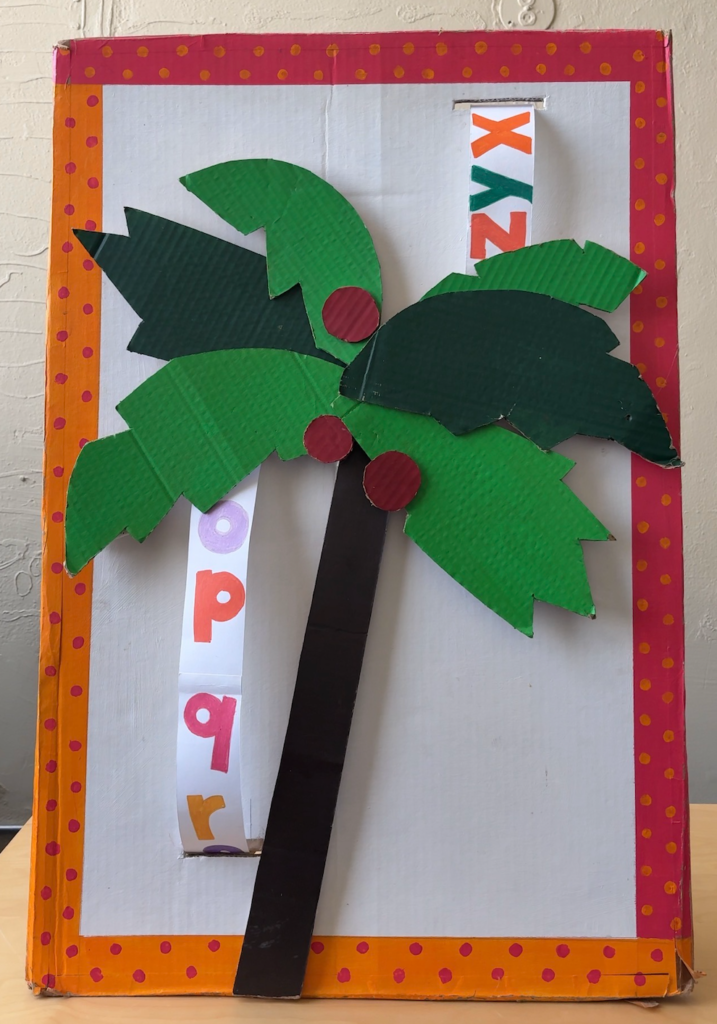
Chicka Chicka Boom Boom
Book by Bill Martin, Jr. and John Archambault
Not only does she perform at the theatre, but she takes these story times to libraries, schools, and birthday parties across the Twin Cities. This keeps her quite busy. Enough, in fact, that she’s training other puppeteers to perform as she does, “I can’t quite figure out how to clone myself,” she says.
What you will witness if you attend one of Chelly’s story times is a woman entirely in her element, beaming with enthusiasm. I’ve seen it myself. But what isn’t visible is her process at curating these shows: choosing a book, adapting it into a script, meticulously designing a show, rehearsing, loading the car, performing, packing it all back up, and then doing it over a few days later. The life of a puppeteer!
As for Turnip, he has lost his tail, been sewn back together, and repurchased a few times, but he still appears at each Saturday Story time and he’s not going anywhere. I suppose that’s the life any puppet would want: to be loved and experienced fully.
Perhaps HOBT’s most expansive offering are its puppet-making workshops, open to anyone who would like to participate, without any restrictions. Sessions range from quick, make-and-take classes to multi-week intensives covering styles like shadow puppetry, finger puppets, masks, and large-scale body puppets.
These workshops offer a prime example of when the core employee structure expands, with HOBT hiring on contracted artists as needed to bring in additional hands or skillsets. Thomas works within this system. Rather than holding a fixed position at the theatre, he enters on a project basis; teaching, performing, or contributing when needed.
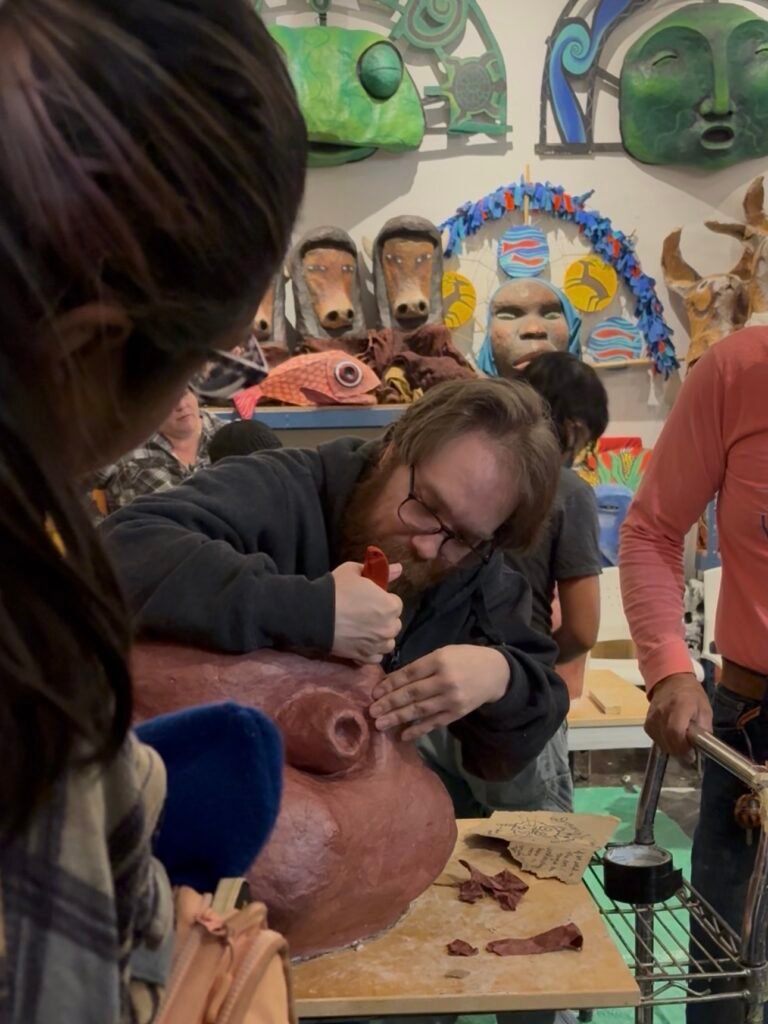
Beyond the theatre, workshops travel outward into schools, libraries, community centers, festivals, homeschool programs, and camps. Some are short visits. Others are long-term. But each experience is shaped to meet the needs of the community it enters.
The theatre also hosts visiting artists who use the space for performances, workshops, and informal gatherings—everything from birthday parties to “sip and puppet” events, as well as “Puppets in Progress,” which offers space for artists to share works-in-development.
“Everything we do here at HOBT, we do to create community,” Kotlyar said. “Puppetry is at the center of what we do, but it’s the relationship-building that keeps the programs alive. Some people come because they’re curious about the art form. Others come because they’re looking for community. The most important thing is having a space where anyone can come, learn, and participate.”
For current programming and events, visit HOBT.org.
Why choose puppetry?
You can begin to understand anything by studying its history, confines, or defining features. But none of that will explain the human element that gives something meaning. For that, there is only the question of why.
Why do you do what you do?
To explore that, I spoke with Chelly and Thomas, specifically.
“When I started working with puppets, I noticed a distinct difference between the kids interacting with me and the kids interacting with the puppet,” Chelly told me. “They seemed to be their most genuine selves with the puppet—speaking more, laughing more, even jumping up out of their seats to be part of the show.”
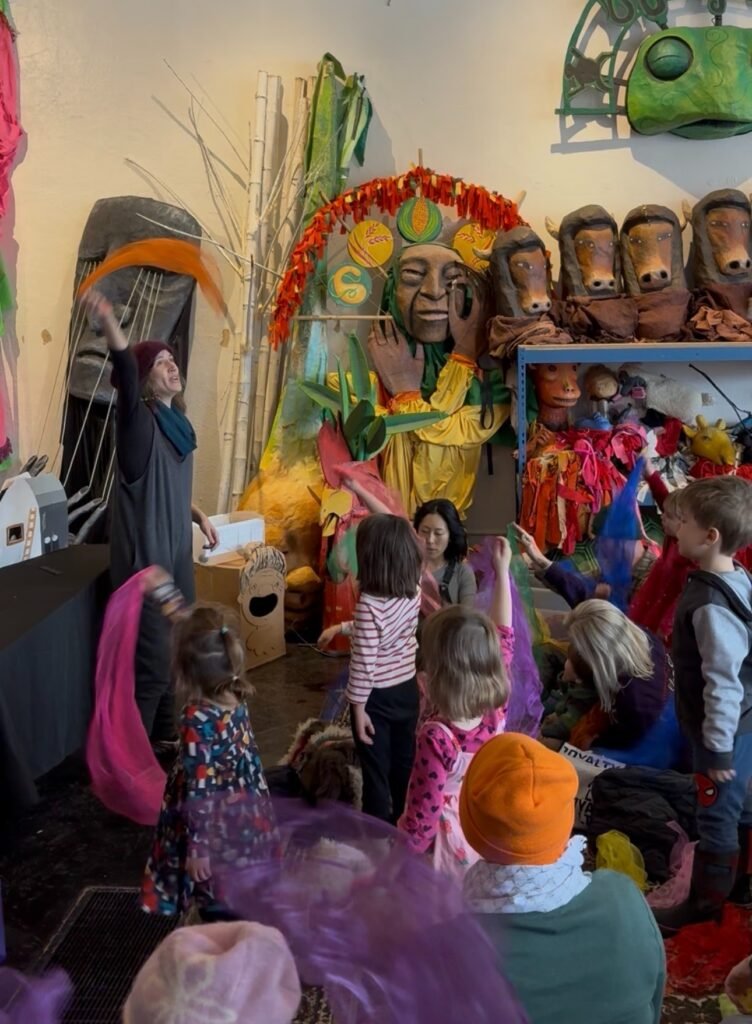
Things changed when she realized that that feeling turned inwards, as well.
“It started to feel like that for me too,” she said. “I felt more comfortable. I felt more like myself. Performing with a puppet meant I was in charge of where the attention went. It was almost like I could say: don’t look at me—look at this thing I’m holding!”
Object theatre, she went on to explain, gives performers control. Instead of being the sole focus of a performance, a puppeteer is granted the ability to guide focus, bringing the audience’s attention to wherever they see fit. Performing with a puppet, then, is like having a shield, and for those that feel the pressure of being watched, it is a boundary that makes performance possible.
“I consider myself an awkward person,” she said. “Sometimes even speaking can be difficult. But through a puppet, I’ve been able to perform in front of audiences—not just children—and feel comfortable. I wouldn’t be able to do that otherwise.”
But Chelly’s experience is only one entry point. Thomas arrived at the same art form from an entirely different direction.
“I’ve heard people say that before, that performing through a puppet helps to ease some of the stress that they may feel being perceived,” he told me. “But I never had that experience.”
For Thomas, the impulse to perform was always present. He pursued it early, studying at the Perpich Center for Arts Education, before going to NYU to study film.
But what drew him into the arts wasn’t necessarily one medium, but a quality. Something he describes as “evidence of the human hand,” which is an increasingly rare thing in this age of digital polish and AI slop.
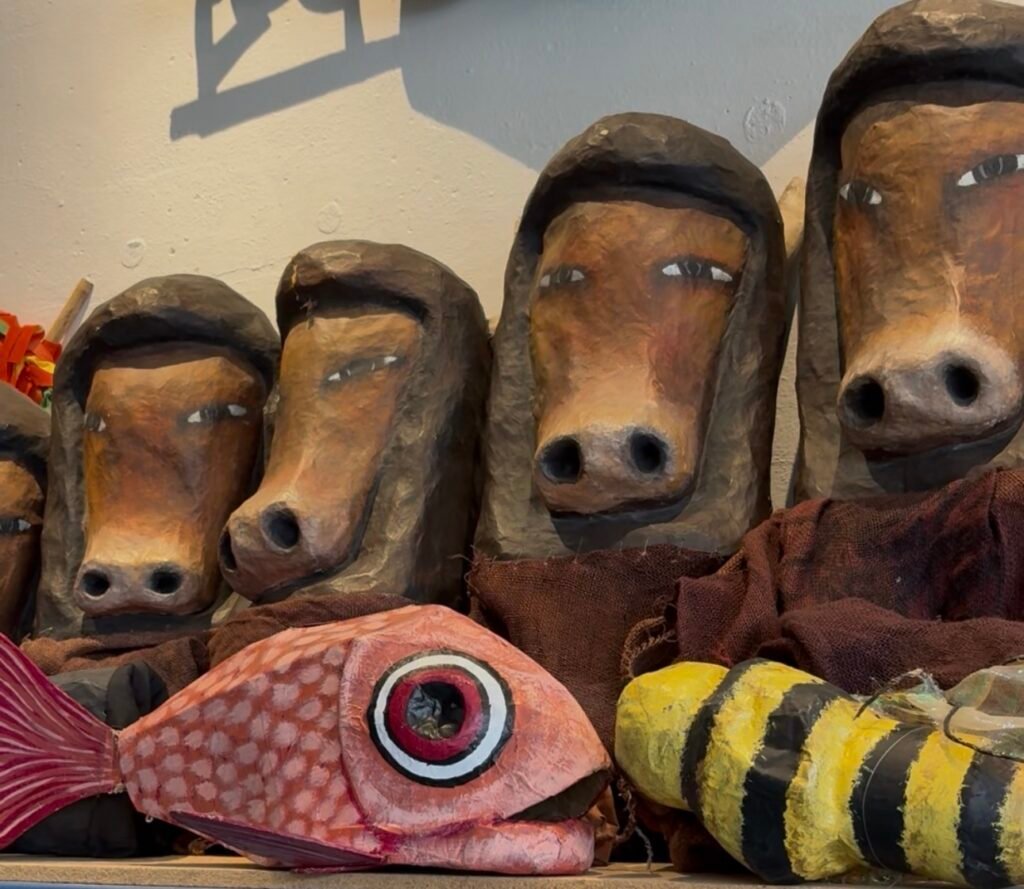
“I realized that my favorite part about art was being able to tell that a human did it,” he said. “I prefer to notice the peculiarities, and I like to imagine the person that they are tied to; what their process was behind creating.”
Upon his return to Minneapolis, Thomas began moving through the local arts scene—making things, meeting people, and saying yes to projects. There wasn’t a single moment where he decided to become a puppeteer, but when he eventually found himself within the community, he realized that it wasn’t just the art form that spoke to him, but how closely it aligned with what he had already been looking for.
Puppetry, by its nature, carries the marks of its maker. It does not hide its process; it depends on it—being built by hand and then performed in real time. Human presence is unavoidable, and that’s something we desperately need right now.
How do you survive as a puppeteer?
Spoiler: This section will only make you realize that a career in the arts is not only possible, but entirely necessary if you feel compelled towards it.
“I suppose it’s common knowledge that the ‘starving artist’ is a thing,” Thomas began, “But if you choose a career in the arts, you go into it understanding what that means. For me, that means multiple streams of income to cover my cost of living. I have a ‘normal’ job as a caretaker, and then I’m immersed in the arts in pretty much every other way.”
As a contracted artist working across puppetry theatres in the Twin Cities, Thomas moves through a freelance system. His income comes from a range of jobs, with short-term arts jobs making up for almost half.
“A big part of being an artist is being open to the jobs that are available. A lot of the jobs I’ve done are things that I never knew existed.” Guarding a life-sized cardboard castle at night was one; performing an environmental hand puppet show was another.
Remaining open has given him the career that he always wanted, and for Thomas, there was never another way.
“I was always going to do something in the arts,” he told me, “As a young child, I decided that. My attitude was, as long as I am doing something creative and telling stories or helping people play, that I am going to be happy doing what I am doing. And so far that has been true.”
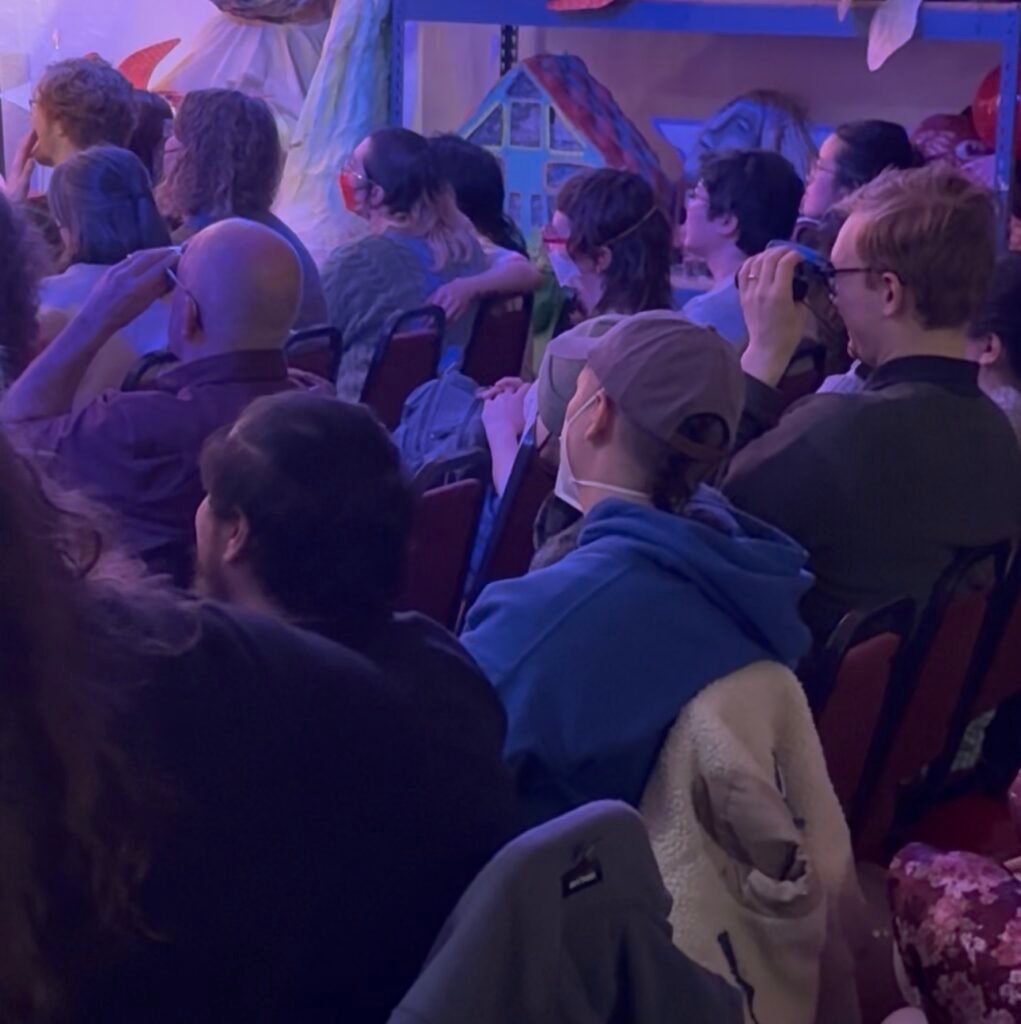
At the institutional level, theatres like HOBT rely on a different kind of survival. Operations are supported through a mix of donors, grants, and arts funding—support that has become increasingly unstable in recent years.
“Not only am I a puppeteer here, but I did our books for the last year,” Chelly told me. “Funding is a constant battle for us. We are always looking for grants, but it has only gotten more difficult and there seems to be no end in sight. We are resilient, though, and we will always find our way through.”
Despite these hardships, HOBT remains closely tied to the Minnesota arts ecosystem, including support from organizations such as the Minnesota State Arts Board and the Hennepin County Arts Association.
Still, money is not only answer to the question of how puppeteers survive. What became clear during these conversations is that survival in puppetry depends on something less tangible, but more enduring: the preservation of the art through sharing.
“There’s some magic to puppetry that I have witnessed: nothing is a secret. Nothing is hidden. Everything is shared and taught,” Elina told me.
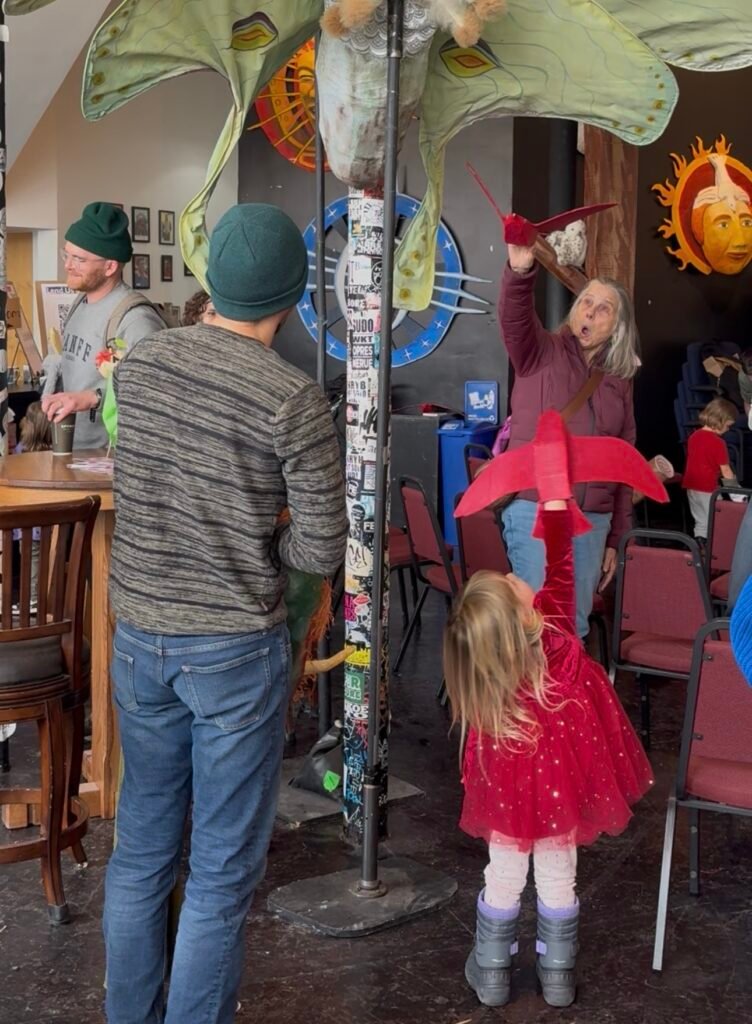
That ethos runs throughout the puppetry community, especially in Minneapolis, where theatres exist less as competitors and more as collaborators. Artists move fluidly between spaces, teaching one another, building together, and passing along a shared love of the craft.
As Thomas put it, “There is nothing intrinsically special about Minneapolis. It is not like we were found on top of a crashed puppet meteorite!” We laughed, “It is through our thoughts and our actions that the culture we have here remains. It is the outcome of years and years of sharing, and that does entail a responsibility to continue.”
At HOBT, especially, that exchange is constant. Everyone who enters the theatre is taught something: how to build a puppet, how puppets function, and especially how much joy they can bring.
“It’s not an exaggeration that every artist we work with comes here both to teach and to learn,” Elina said. “There is never really a point where you’re done with either. You can always teach more, and you can always learn more.”
This philosophy strikes a special place that HOBT has homed in on; making sure that the puppets they use, create, and perform with can be created and made by everyone.
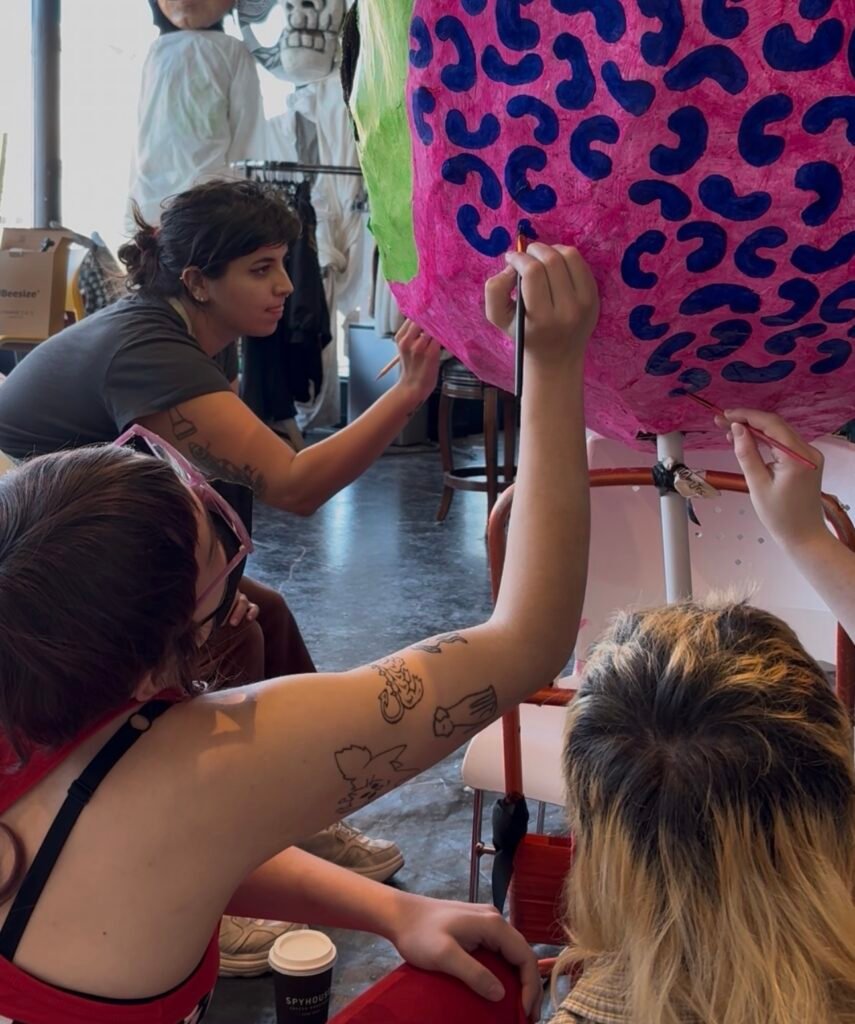
“We’re very scrappy here,” Chelly said. “If you look at our work, it’s always made from things you’d find around your house. That’s intentional. We want people to see it and think, “I can do this, too. I can be a puppeteer!’. It is an incredibly accessible art form, and anyone can be a puppeteer.”
For Chelly, that accessibility is the point. “We are bringing on the next generation of puppeteers,” she said. “And in the end, that is the most important part of puppeteering.”
This is what I’ve highlighted as the real point of survival. Puppetry endures because, for the people who practice it, keeping the art alive is inseparable from passing it on.
Lasting Remarks
Everywhere around us there is more to be discovered. A person you do not know. A job title you do not recognize. A practice you’ve seen only from a distance. A way of thinking or living that you’ve never considered.
All of this remains that way unless someone decides to ask, to step closer, to pay attention.
Puppetry is undeniably one of these things. Familiar enough to recognize, but strange enough to never be fully understood at first glance. The same is true wherever there are people creating…or maybe just wherever there are people.